Review · Tokyo Wire
Government taking 'precautions' after AI spots cyber security issue Image source, Reuters Governments, companies and organisations are racing to make sure their websites are secure after a serious flaw was spotted by Artificial Intelligence (AI). Lots of websites have been affected, including Amazon, Wikipedia and some belonging to governments and councils too. The issue is related to a programming language called PHP which is used by millions of websites all over the world.
There is a risk that these websites could be hacked and the UK's National Security Centre has issued an alert and advice telling organisations using PHP to immediately fix the problem or take their sites down until it is fixed. Find out more below. What happened with PHP?
Image source, Reuters Image caption, Some websites have been taken offline as a precaution PHP is part of the high-tech workings behind the internet and is used by millions of websites all over the world. It was created for web development - not all websites use it, but it powers a large portion of the internet. During a cyber-security project, companies were using AI to look for and warn about online security risks - and the flaw in PHP was spotted and reported.
A fix was being prepared but before it could be given to users as an update, the news came out accidentally. This has led to websites that use PHP, and who are worried about being hacked, to quickly make sure their sites are secure or take them offline if they aren't sure. Some sites were taken down at first before coming back online a few hours later.
Which websites are affected? Image caption, An error message like this appeared on some BBC websites It is difficult to know exactly how many websites are affected but according to BBC Cyber Correspondent Joe Tidy it could be millions. The UK government says some of its services have been affected and said its experts are working to "identify and fix potential exposures to our systems".
Some local council websites in the UK - for example in Edinburgh and Oxford - and NHS Scotland were among those to take their sites down for a period while the flaws were dealt with, and other government sites around the world were affected too, such as in the Netherlands and Finland. The free encyclopaedia Wikipedia took down parts of its website and the BBC was also affected with some pages just showing an error message. Speaking in the House of Lords, Baroness Lloyd of Effra said the number of government services that are unavailable has "largely resulted from precautionary measures" taken to protect systems while updates are put in place.
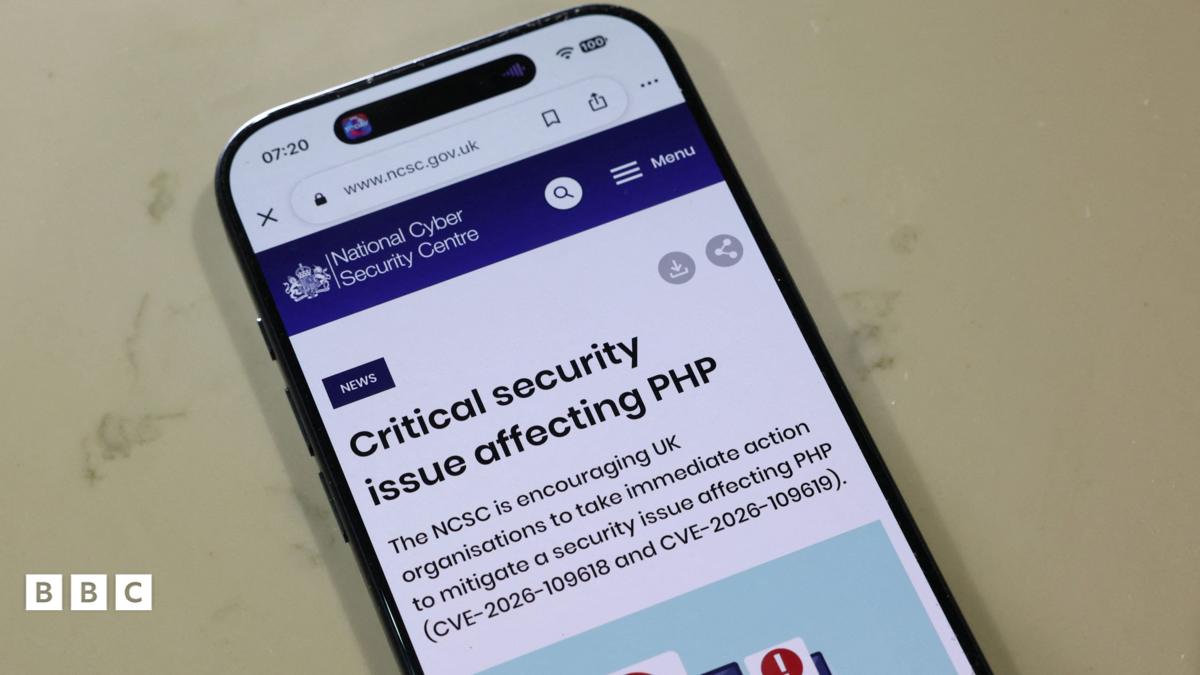
She say experts are working closely with departments to "restore the services safely and securely". What is the advice being given? Image source, Reuters Image caption, The UK's National Cyber Security Centre issued advice for companies and organisations affected BBC Technology and AI editor, Zoe Kleinman, says that the weaknesses found in the PHP programming language had been quietly resting there for years and are not easy for hackers to take advantage of.
She adds that AI "is getting a lot of credit here for assisting researchers in finding the bugs, and the PHP foundation, which oversees the programming language, was on the case and issued a fix." "At the moment there is nothing us consumers can do as the pressure is on companies and institutions to work to protect themselves - and us," added BBC Cyber Correspondent Joe Tidy. Banking systems and other organisations which hold sensitive data have a lot of protections in place, he says. A UK government spokesperson has urged "all organisations, private and public, large and small" to follow guidance to protect their systems.
The UK's National Cyber Security Centre (NCSC), says that there are no signs of any successful hacks so far and it has told those who use PHP to apply the fixes. If updates or temporary protections cannot be applied quickly enough, they are recommending companies and organisations to take down their website temporarily.
Source: BBC